Microsoft starts billing Copilot Studio agents on the GitHub harness from 1 September
 Reviewed by Helen Jones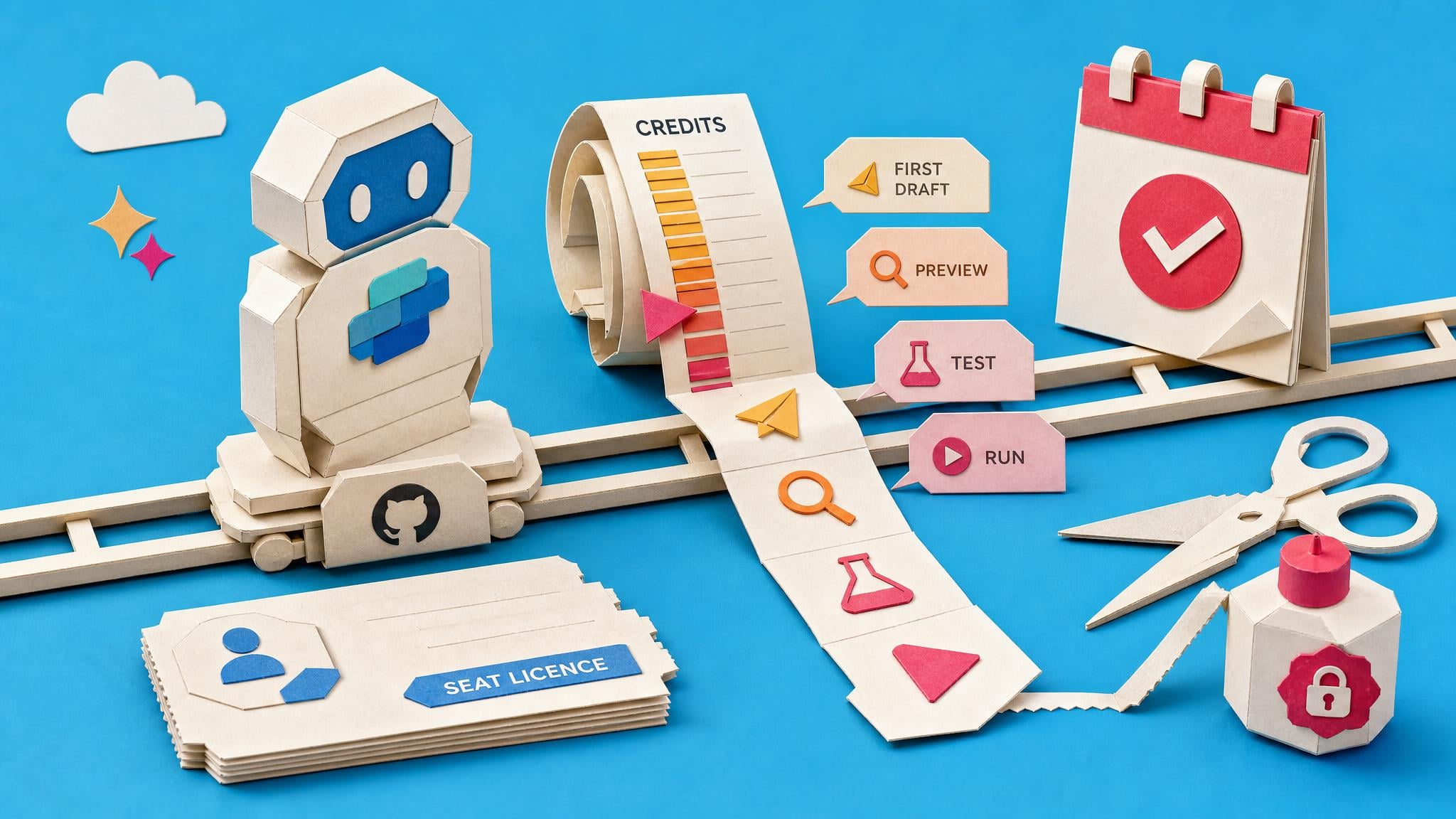
Microsoft has put the GitHub Copilot harness in Copilot Studio into general availability for production use. Agents and workflows on that harness now run on usage-based Copilot Credits, covering model tokens, tools and knowledge, and the harness itself. Billing starts at authoring, preview, testing, and evaluation, not only at runtime. It is separate from a user's Microsoft 365 Copilot licence. After a grace period, developer and trial environments move to the same usage-based model on 1 September 2026. Harness choice is fixed when an agent is created. Standard and Copilot Chat harnesses keep different licensing and fair-use treatment for licensed Microsoft 365 Copilot users in Microsoft 365 channels.
Until now, many teams treated Copilot Studio experiments as licence-adjacent extras. Makers could try natural-language agent builds in trial or developer environments without a clear line item, while adoption leads still measured value mainly by seat counts and app button clicks. From 1 September, complex agent work on the GitHub harness becomes metered cost from the first draft prompt. That splits the product story in two. Everyday Copilot in Word, Excel, Outlook, and Teams stays on familiar seat and fair-use rules. GitHub-harness agents become a Power Platform capacity problem, with no post-create migration path if the wrong harness was chosen.
Analysis
Treat this as a cost trap to avoid, not a reason to start agent projects. Before 1 September, ask your Power Platform admin for a list of GitHub-harness agents and any non-billed consumption reports, then pause new builds on that harness until environment credit limits, overage behaviour, and budget alerts are set.
Source note
Pulse published by Collab365 Spaces, reviewed by Helen Jones on . Cite as "Microsoft starts billing Copilot Studio agents on the GitHub harness from 1 September", Collab365 Spaces. 4 sources referenced.