
Power Automate Builders
Stop Fixing. Start Automating.
Tired of Power Automate flows failing silently at 3am or breaking from unannounced updates? This space delivers real-time intel on Microsoft's outages, AI fixes, licensing changes, and approval blueprints—so your automations handle approvals, data copying, and notifications flawlessly. Join to build once and forget, reclaiming hours weekly for what matters.
Get started
Plans from $19/mo·or $79 one-time
3
Courses
7
Research Reports
Your learning path
3 Courses Inside
Expert-curated learning paths with step-by-step lessons

12 lessons
Course
Power Automate JumpStart

19 lessons
Course
Power Automate StepUp
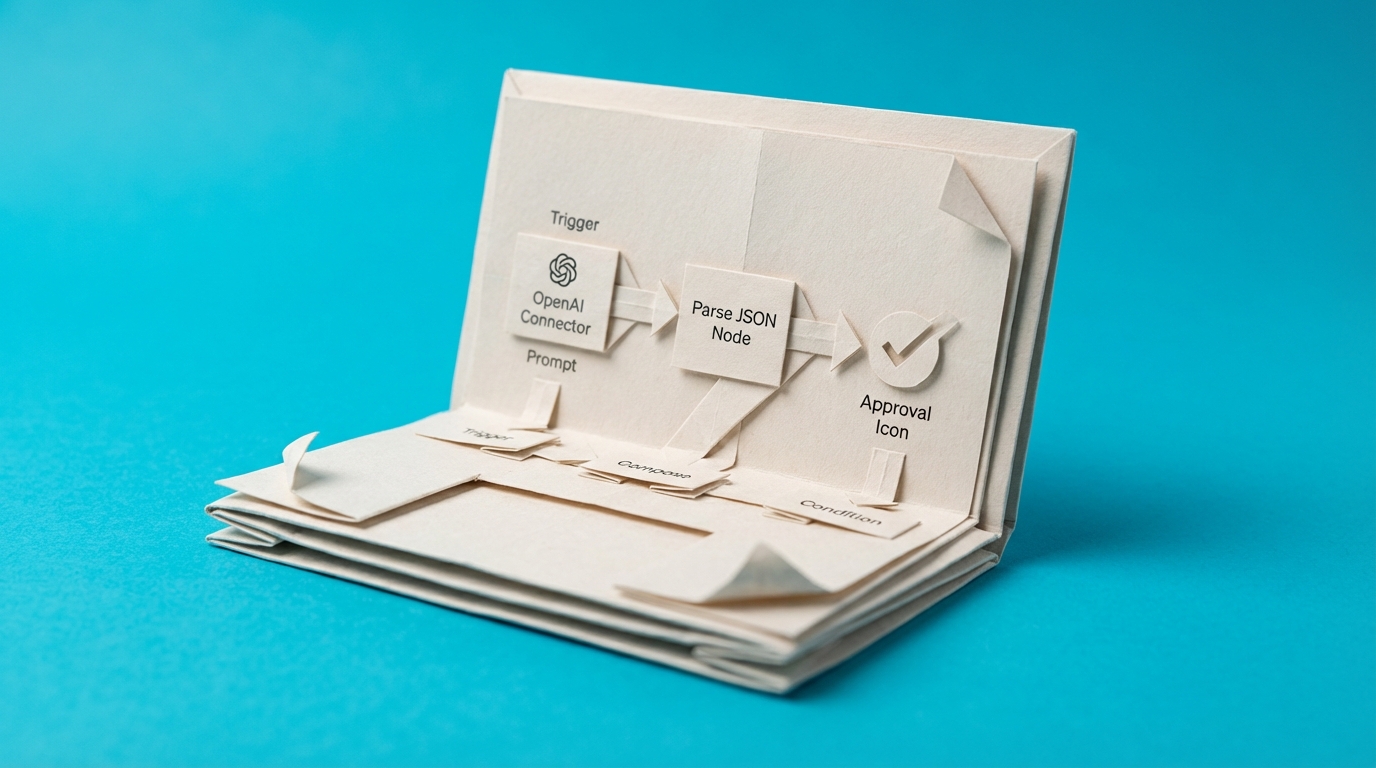
17 lessons
Course
Power Automate PathFinder Challenge (AI)
Waiting for you inside
Here's what you're missing
Pulse
Microsoft adds Copilot AI layer to Power Automate for workflow design and monitoring
Microsoft integrates Copilot as a reasoning layer in Power Automate. Users describe workflows in plain English; AI builds triggers, actions, and logic. Post-deployment, it monitors and dynamically adjusts for changes in emails, documents, or forms. This reduces manual UI struggles and silent failures in automations.
Pulse
Microsoft activates automatic alerts for failing Power Automate flows
Microsoft now activates automatic alerts by default for cloud flows under 90% success with 150+ daily runs, and all desktop flows in managed environments. IT admins receive daily summaries of 24-hour performance data, exposing unreliable automations tenant-wide. This ends silent failures, enforces reliability scrutiny, and prompts builders to design robust flows upfront.
Pulse
Power Automate lets admins bulk cancel or resubmit failed flow runs
Power Automate allows tenant admins to bulk cancel or resubmit up to 20 failed or waiting flow runs via admin center or PowerShell. Targets outage-induced glitches in instant-trigger flows. Reduces manual fixes but caps at 20 runs with 24-hour status delays. Build resilient flows with 'Configure run after' for self-healing.
Pulse
Microsoft launches Translytical Task Flows in Power BI
Power BI's Translytical Task Flows enable direct data updates, annotations, and Power Automate triggers from interactive reports. This eliminates app-switching, reduces manual errors in workflows like approvals from sales dashboards, and integrates analytics with actions reliably.
Pulse
Microsoft tightens links between Power Automate and Copilot Studio
Microsoft updates Copilot Studio for smarter AI model selection, testing, and Power Platform integration. Power Automate gains deeper ties for approvals, data updates in Teams, SharePoint, and Outlook. Access expands to hundreds of connectors. This reduces trial-and-error for non-coders building reliable M365 flows that last.
Pulse
Microsoft retires SharePoint alerts forcing users to Power Automate flows
Microsoft retires SharePoint classic alerts in July 2026, blocking new ones from January and expiring existing ones every 30 days. Users must manually rebuild notifications using SharePoint Rules for basics or Power Automate flows for advanced logic like digests and Teams posts. This disrupts workflows but pushes adoption of durable automations.
+ more exclusive content added regularly
⚡ Microsoft's 2026 release wave will automatically update flows with AI features and interface changes, potentially breaking existing automations without warning.
Stop searching. Start learning.
Without this space
- Chasing silent flow failures with no error clues
- Rebuilding multi-stage approvals after UI changes
- Manually checking production flows for outages
- Wrestling premium licensing for AI and approvals
With this space
- The native failure alerts spotting issues instantly
- A three-stage SharePoint approval blueprint that endures
- AI self-healing desktop flows fixing UIs automatically
- One process license powering 25 high-volume flows
Don't let this pass you by
Get immediate access to all content inside. Cancel your subscription anytime.
Get started
Plans from $19/mo·or $79 one-time
No credit card·Leave anytime·Instant access
Already a member? Sign in