
Executive Summary
The entry-level artificial intelligence job market presents a brutal mathematical contradiction for recent graduates. Job postings requiring generative artificial intelligence skills have surged by 130% across the technology sector. Simultaneously, overall entry-level hiring has declined significantly. Early-career workers between the ages of 22 and 25 facing automation-exposed fields have already experienced a 13% relative decline in employment. This creates a severe bottleneck. Hundreds of recent graduates apply for the exact same junior positions. To bypass automated tracking systems, these applicants send mass outreach messages to recruiters on LinkedIn. They spend hours daily firing off generic templates and AI-generated notes, routinely sending 20 messages a day, only to see a 0% reply rate.
The primary recommendation to reverse this failure rate requires a total abandonment of volume-based messaging. Recent graduates must stop using popular templates from career coaching platforms or default ChatGPT prompts. Instead, applicants must adopt a hyper-personalized, low-friction outreach strategy. Data shows that generic connection requests sit at a 5.44% reply rate, while personalized notes achieve a 9.36% reply rate. Targeted InMails perform even better, reaching response rates between 18% and 25%. A successful strategy involves finding a "hook" (a specific personal detail from a recruiter's profile to mention), keeping the message under 300 characters, and asking a simple question that requires minimal effort to answer.
The most surprising insight from recent recruitment data is that highly polished, AI-generated text now actively harms an applicant's chances. Recruiters process hundreds of messages daily. They have developed a hypersensitive filter for automated language. When an applicant uses ChatGPT to write a perfectly grammatical, highly formal message containing phrases like "I hope this message finds you well," the recruiter instantly flags it as spam. The pursuit of the perfect, professional-sounding message actually strips away the human elements that make networking successful. Small imperfections, direct conversational tones, and specific context are far more effective at securing an interview than a flawless, AI-written essay.
Methodology
This report synthesizes data from multiple large-scale recruitment and outreach studies conducted between 2023 and 2025. The analysis strictly focuses on entry-level technology and artificial intelligence roles within the United States and the United Kingdom. It specifically excludes data related to senior executive hiring, traditional business-to-business sales outreach, and non-LinkedIn communication channels.
The quantitative foundation of this research relies on aggregated outreach statistics from major automation and lead generation platforms. Data provided by Belkins involves the analysis of millions of cold outreach attempts across multiple business domains, measuring open rates, reply rates, and conversion metrics. Statistics regarding LinkedIn-specific engagement come from Expandi, which analyzed over 70,130 real campaigns from their automation platform to establish baseline benchmarks for connection acceptance and message reply rates. Additional benchmark data stems from Closely, detailing industry-specific response metrics and the performance gap between generic and customized messaging.
Macroeconomic labor trends and hiring decline statistics originate from academic and institutional research. The Stanford Digital Economy Lab provided high-frequency payroll data (sourced via ADP) to quantify the employment drop among early-career professionals in fields exposed to automation. United Kingdom graduate hiring metrics rely on data from the Institute of Student Employers and related technology sector analyses. Artificial intelligence job posting growth statistics utilize data from Lightcast, which tracks millions of unique job postings to measure skill demand.
Qualitative insights regarding recruiter behavior, pet peeves, and candidate failure modes are sourced from direct professional discourse. This includes scraping and analyzing discussions from verified recruiter and engineering communities on Reddit, specifically the subreddits r/recruiting, r/cscareerquestions, r/ExperiencedDevs, and r/recruitinghell. These forums provide unfiltered access to the internal mechanics of candidate screening and the exact reasons why hiring managers reject specific outreach attempts.
Analysis: The Mathematics of the Zero Percent Reply Rate
Understanding the failure of generic outreach requires analyzing the broader macroeconomic forces shaping the technology labor market. The landscape for recent college graduates has shifted dramatically since late 2022. While media reports highlight a massive boom in artificial intelligence development, the actual hiring data tells a diverging story.
Unique job postings for generative artificial intelligence skills grew from virtually nothing in early 2021 to tens of thousands by the middle of 2025. The demand for roles like Generative Artificial Intelligence Engineer saw steady, exponential increases throughout 2024 and 2025. However, this growth remains concentrated in middle-to-senior level roles. For recent graduates, the doors have tightened. A comprehensive Stanford Digital Economy Lab study utilizing high-frequency payroll data revealed a 13% to 16% relative decline in employment for early-career workers in occupations most exposed to automation, such as software development and data analysis. In the United Kingdom, technology companies cut graduate roles by 46% between 2023 and 2024, with projections indicating further declines.
This contraction creates a brutal mathematical reality for job seekers. An entry-level artificial intelligence job posting now receives a massive flood of applications. Many applicants possess identical credentials. They hold a recent computer science degree, list a handful of academic projects, and display certifications from online learning platforms. Because standard online applications yield exceptionally low success rates in this saturated environment, graduates turn to direct LinkedIn outreach.
A typical recent graduate adopts a grueling daily routine. They wake up, spend four to six hours tweaking resumes, and then send 20 connection requests or direct messages to recruiters at artificial intelligence companies. Over a five-day work week, this equates to 100 messages. Over a month, the applicant sends 400 messages. Yet, this intense effort frequently results in a 0% reply rate.
The applicant assumes the market is entirely broken. In reality, their outreach methodology is fundamentally flawed. When an applicant sends 20 identical messages a day using a free ChatGPT prompt, they do not stand out. They merely add to the noise. Recruiters are inundated with these exact identical messages. The 0% reply rate is not a reflection of the applicant's potential as an engineer. It is a direct reflection of a failed communication strategy that prioritizes volume over relevance.
Evidence: The Measurable Gap Between Generic and Personalized Outreach
The statistics regarding LinkedIn outreach highlight a massive divide between generic messaging and targeted efforts. For job seekers, understanding these benchmarks is critical to diagnosing their own failure rates.
The industry average response rate for all LinkedIn messages stands at 10.3%. This metric significantly outperforms traditional cold email, which averages a 5.1% response rate. However, this 10.3% average relies heavily on seasoned sales professionals running highly optimized, targeted campaigns. For the average job seeker sending connection requests, the numbers tell a different story.
When a user sends a basic LinkedIn connection request without an attached note, or with a purely generic note, the reply rate drops to 5.44%. A generic note is defined as a message lacking any specific reference to the recipient's background, company, or recent activity.
Conversely, when applicants include a personalized message in their connection request, the reply rate increases to 9.36%. This represents a 72% improvement in engagement simply by adding specific context. Yet, aggregated platform data indicates that a staggering 87% of all LinkedIn connection requests sent do not include any personalization whatsoever.
| Outreach Type | Average Reply Rate | Improvement vs Generic |
|---|---|---|
| Generic Connection Request | 5.44% | Baseline |
| Personalized Connection Request | 9.36% | + 72% |
| Average LinkedIn Message | 10.30% | + 89% |
| Targeted Premium InMail | 18.0% - 25.0% | + 230% to + 359% |
Data compiled from Expandi and Closely industry benchmarks (2024-2025).
The data further reveals that certain premium features offer exceptionally high returns when executed correctly. LinkedIn InMail response rates average 6.38% overall. However, when these premium messages are highly targeted and personalized, response rates soar to between 18% and 25%.
Personalization Drives Higher LinkedIn Reply Rates
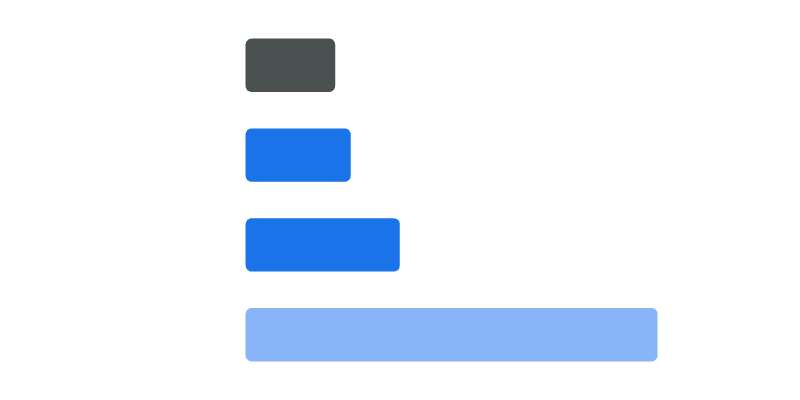
Data aggregates show that personalized connection requests achieve a 72% higher reply rate than generic requests. Targeted InMails secure the highest engagement overall.
Timing also heavily influences these metrics. Outreach conducted on Tuesdays sees the highest average reply rates at 6.90%, closely followed by Mondays at 6.85%. Sending messages during the weekend results in severe drop-offs. Saturday outreach drops to a 6.40% baseline, and in certain business sectors, Saturday reply rates plummet to 2.65%. Furthermore, sending messages early in the morning, specifically between 7:30 AM and 9:00 AM local time, yields optimal visibility before recruiters begin their daily screening tasks.
Length is another highly measurable factor. Data confirms that messages under 300 characters generate significantly better outcomes. Specifically, the optimal length for a connection request sits between 200 and 250 characters. Messages that exceed 150 words see the lowest reply percentages across the board.
Applying this math to a recent graduate's routine clarifies the problem. If an applicant sends 20 generic requests a day (100 a week) with a 5.44% baseline acceptance rate, they might gain 5 new connections. However, if their profile is unoptimized and their message contains trigger phrases that recruiters hate, that 5.44% baseline plummets to zero.
Evidence: Specific Phrases and Templates Recruiters Ignore
Recruiters in the artificial intelligence sector manage extreme candidate volume. To process hundreds of inquiries efficiently, they rely on pattern recognition to filter out low-effort candidates. Certain phrases, popularized by online courses, YouTube tutorials, and basic artificial intelligence prompts, act as immediate disqualifiers.
The Death of "I Hope This Message Finds You Well"
The most universally despised opening phrase in recruiter outreach is "I hope this message finds you well". This exact string of words appears in millions of automated sales and job-seeking emails. It consumes valuable screen space on mobile devices and signals to the recipient immediately that the message was either generated by a bot or copied from a generic template. It offers no value, builds zero rapport, and actively irritates hiring managers who read it dozens of times a day.
Generic Enthusiasm and Weak Positioning
Another highly ineffective phrase is "I am a recent graduate". Leading a message with this statement positions the applicant as a liability rather than an asset. It highlights a lack of commercial experience before offering any evidence of technical competence.
Furthermore, generic enthusiasm markers such as "I love AI" or "I am passionate about AI" fail to resonate entirely. These statements are impossible to verify. Nearly every applicant in the talent pool claims a passion for artificial intelligence. These phrases consume character counts without demonstrating specific knowledge of machine learning, data science, or the target company's specific product architecture. Data scientists and hiring managers routinely mock these phrases on industry forums, noting that candidates expressing vague passion rarely possess the deep mathematical competence required for the role.
The Danger of Popular Coaching Templates
Applicants frequently sabotage their efforts by relying on heavily circulated templates from career influencers and online programs. Platforms like Wonsulting provide copy-paste scripts intended to help candidates follow up on interviews or establish connections. A widely shared Wonsulting template advises candidates to create artificial urgency by writing:
"Hi [Name], quick timing heads up. I have an interview with [Company A] on and expect feedback by. Your role is a top choice for me. What's the fastest way to move forward?"
While this tactic attempts to manage power dynamics, technical recruiters recognize the exact wording. When a recruiter receives the identical script from twenty different junior developers in a single week, the template loses all effectiveness. The sender appears inauthentic and manipulative.
Similarly, templates promoted by career coaches like Austin Belcak often suggest specific cadences for networking. While the underlying strategy of adding value is sound, candidates frequently rip the exact example scripts from these courses and send them verbatim. Recruiters quickly identify these templated approaches. If a message reads like it was pulled from a viral YouTube tutorial, it gets ignored.
The Udemy and Coursera Trap
Mentioning online certifications as a primary selling point in a cold message often backfires. Many templates prompt graduates to highlight that they have completed a specific Udemy or Coursera course in Python or Data Science.
Continuous learning holds value, but recruiters on industry forums frequently rant about candidates who present a $15 online course as an equivalent to practical, commercial engineering experience. Mentioning these specific platforms in an initial 250-character outreach message signals a junior mindset. It tells the recruiter that the candidate lacks complex, original project work to discuss.
The ChatGPT Prompt Giveaways
The proliferation of ChatGPT has introduced a new layer of easily identifiable, generic language. When a job seeker asks a large language model to "write a LinkedIn message to a recruiter for an entry-level AI role," the output is predictably robotic.
Common ChatGPT prompts generate overly formal phrasing, perfect but sterile grammar, and generic compliments. The artificial intelligence frequently outputs phrases like:
- "I was highly impressed by your company's innovative culture and industry-leading vision."
- "I am eager to leverage my skills to drive impactful results for your team."
- "My background perfectly aligns with the dynamic landscape of your organization."
Recruiters note that these messages read exactly like the spam emails of the early 2000s. They lack the small imperfections, directness, and personality of human communication. Technical hiring managers state that artificial intelligence generated copy is instantly recognizable and easily dismissed. If a message reads like a polished corporate press release, the recruiter assumes the candidate invested zero personal effort and ignores the request.
Evidence: Five Common Failure Modes for Recent Graduates
Beyond specific banned phrases, recent graduates consistently exhibit five broader behavioral failure modes in their outreach strategy. These structural errors ensure that even well-meaning, grammatically correct messages end up in the digital trash bin.
Failure Mode 1: The Generic Spam Blast
The most prevalent error involves treating LinkedIn like a traditional job board. Applicants filter for technical recruiters, select dozens of profiles, and send the exact same connection request to all of them. This strategy operates on the flawed assumption that outreach is purely a numbers game.
Recruiters explicitly state that they never respond to candidates who utilize a "select all" approach. A message that reads, "I came across your opening for a Machine Learning Engineer and wanted to reach out. I have attached my resume," fails because it lacks any specific context. It does not reference the recruiter's specific company, a recent product launch, or any shared professional interest.
Without a "hook"—a specific personal detail or professional observation pulled from the recruiter's profile—the message blends into the background noise. Sending 100 generic messages yields worse results than sending 10 heavily researched, highly specific notes. Quality targeting dramatically outperforms high-volume spamming.
Failure Mode 2: The Bible-Length Message
Recent graduates often feel compelled to summarize their entire academic history, thesis project, and career aspirations in their very first message. This results in dense, multi-paragraph text blocks.
Industry data shows that the vast majority of professionals check LinkedIn messages on their mobile phones. A message that requires scrolling to read is fundamentally flawed. Recruiters scan text; they do not read it thoroughly. Messages exceeding 150 words see the absolute lowest reply percentages.
When a graduate sends a massive wall of text detailing their coursework in neural networks and their deep-seated passion for algorithms, the recruiter simply closes the application window. The optimal length for a connection request or initial outreach sits strictly between 200 and 250 characters. Brevity signals respect for the recipient's time.
Failure Mode 3: High-Friction Calls to Action
A critical mistake occurs at the end of the message. Graduates routinely close their outreach with demands that require significant effort from the recruiter. Phrases like "Please review my attached resume and let me know when we can schedule an interview" or "Can you provide feedback on my GitHub portfolio?" create massive friction.
Recruiters are evaluated on their ability to fill roles quickly with qualified candidates. They are not evaluated on their willingness to provide career coaching to strangers. Asking a professional to dedicate fifteen minutes to reviewing a junior portfolio is an enormous imposition.
Successful outreach relies on a frictionless call to action. The goal of the first message is solely to generate a reply, not to secure a job offer. Ending a message with a simple, low-effort question regarding a recent industry trend or the specific technology stack the team uses is far more likely to receive a response.
Failure Mode 4: The Uncanny Valley of AI Polishing
As previously noted, the over-reliance on generative artificial intelligence tools creates a distinct structural failure mode. Candidates use ChatGPT to write their cover letters, polish their resumes, and draft their LinkedIn messages.
While artificial intelligence serves as an excellent research assistant, using it to finalize copy creates an "uncanny valley" effect. The text appears technically flawless but entirely devoid of human nuance. Technical hiring managers report that they can instantly spot an applicant who relies entirely on language models.
Furthermore, when candidates use artificial intelligence to generate their applications, they consistently fail to articulate constraints, tradeoffs, or failure modes regarding their past projects. They present a list of polished wins without context. In high-signal tech markets, recruiters look for reasoning and problem-solving capabilities under ambiguity. An AI-generated outreach message strips away the candidate's unique voice, making them appear interchangeable with thousands of other applicants who used the exact same prompt.
Failure Mode 5: Misunderstanding the Recruiter's Motivation
The final failure mode involves the fundamental framing of the message. Recent graduates typically center their outreach entirely around their own needs. They state their desire to "break into the artificial intelligence industry" or "find a company where I can learn and grow from senior mentors".
This approach violates the core principle of business outreach. The recruiter does not care about the applicant's desire to learn. The recruiter cares about solving a specific business problem for their engineering team.
The outreach must focus on the company's pain points and how the candidate's specific technical skills can alleviate those issues. Shifting the language from "I am looking for an opportunity to grow" to "I noticed your team is scaling its computer vision product, and my recent project using PyTorch directly aligns with that architecture" transforms the dynamic. The message becomes about the employer's needs rather than the graduate's aspirations.
Recommendations: The 7-Day Outreach Diagnostic Process
A candidate sending twenty ignored messages a day requires a complete system reset. Continuing the same behavior will only lead to further frustration and potential account restrictions from LinkedIn. The following seven-day diagnostic protocol provides a structured methodology for a recent graduate to audit their current practices, abandon generic templates, and build a high-converting outreach engine.
Day 1: The Digital Footprint and Metric Baseline Audit
Before sending another message, the candidate must halt all outgoing communications and assess their baseline. The first task involves reviewing the past month of sent messages. The applicant should calculate their exact connection acceptance rate and reply rate. If the reply rate sits below 10%, the current messaging strategy is failing and must be discarded.
Next, the candidate must audit their own digital footprint. When a recruiter receives a message, their absolute first action is to click on the sender's profile. If the profile lacks visibility and clarity, the best outreach message will still fail.
The candidate must remove generic headlines like "Actively Seeking Opportunities" or "Recent CS Graduate." These phrases waste valuable search algorithm real estate and scream desperation. The headline must reflect specific technical capabilities. A correct headline reads: "Machine Learning Engineer | Python, PyTorch | Building Scalable LLM Solutions."
The candidate should also review their "About" section to ensure it highlights measurable project outcomes rather than listing basic coursework. They must verify that their GitHub repository links are functional and showcase clean, well-documented code. Finally, any mention of basic online tutorials should be moved to the bottom of the profile, placing emphasis on complex, original projects.
Day 2: Audience Segmentation and VIP Identification
The generic spam blast fails because it targets the wrong people at the wrong time. On the second day, the candidate must stop scraping generic lists of "Technical Recruiters" and learn to segment their audience.
The most effective outreach targets high-intent leads. The candidate should identify companies that have recently announced funding rounds, launched new artificial intelligence products, or posted job openings within the last 24 to 48 hours. Reaching out to a company that posted a job 30 days ago is generally a waste of effort.
Once target companies are identified, the candidate must locate the correct contact. Messaging a generic Human Resources inbox yields poor results. The candidate should use LinkedIn filters to find the specific hiring manager. For an entry-level data science role, the target is likely a "Senior Data Scientist," "Lead Machine Learning Engineer," or "Director of Analytics". These individuals experience the daily pain of an understaffed team and possess the authority to bypass the standard recruiting filter.
The candidate should compile a list of 15 to 20 highly relevant targets, rather than a list of 100 random recruiters. All targets should be logged in a unified tracking spreadsheet to monitor interaction dates, company names, and eventual outcomes.
Day 3: The Profile Hook Search
Personalization requires specific context. On the third day, the candidate must practice finding the "hook" for their target list. A hook is a personal, professional detail found on the target's public profile that serves as the foundation for the outreach message.
The candidate should spend five minutes reviewing the recent activity of each target on their list. Does the hiring manager share articles about specific large language model developments? Did they recently comment on a post about data pipelines? Have they published a blog post or spoken at a conference?
If the target has no recent activity, the candidate should look at their career trajectory. Did they transition from a non-traditional background into tech? Do they share a mutual connection or an alma mater? The candidate must document one specific, genuine hook for each person on their list. If absolutely no hook can be found, the candidate should consider dropping that individual from the priority outreach list.
Day 4: Drafting the 250-Character Note
With targets identified and hooks documented, the candidate must rewrite their outreach templates. The objective is to craft a message under 300 characters that feels human, references the hook, and ends with a low-friction question.
The candidate must banish all AI-generated text and formal corporate jargon from this process. They should write the message exactly as they would speak to a respected colleague at a professional meetup.
A failed generic draft looks like this:
"Dear Hiring Manager, I hope this message finds you well. I am a recent graduate passionate about AI. I saw your job posting and believe my skills make me a perfect fit. Please review my resume."
The revised, highly targeted draft should look like this:
"Hi Sarah, I saw your recent post on the challenges of scaling RAG pipelines—really insightful points on latency. I recently built a similar semantic search tool using LangChain. Are you open to a quick connection to follow your team's work?"
This revised message is short, proves the candidate did their research, highlights a relevant technical skill without begging for a job, and requires a simple "yes" to accept the connection.
Day 5: The Value-First Engagement Strategy
Before sending the carefully crafted connection requests, the candidate must utilize a strategy known as "warm-up" or value-first engagement. Sending a cold message to a stranger carries inherent friction. The candidate can reduce this friction by interacting with the target's content prior to reaching out.
On day five, the candidate should visit the profiles of their top targets and engage with their public activity. This involves leaving a thoughtful, professional comment on a recent post or sharing an insight related to the target's company. This action puts the candidate's name and optimized headline in the target's notification feed.
When the connection request arrives a day or two later, the candidate is no longer a completely cold lead. The target will recognize the name from the comment section. This psychological familiarity significantly increases the likelihood of the connection request being accepted.
Day 6: The Low-Friction Follow-Up
Many job seekers assume that if a connection request is accepted but no conversation follows, the lead is dead. In reality, professionals are busy, and silence rarely indicates rejection. A strategic follow-up is essential, but it must be executed carefully to avoid becoming an annoyance.
Timing is critical here. Analysis of over 16,000 LinkedIn connection requests shows that 63% of acceptances happen within the first 24 hours. If a request lingers beyond seven days, it is rarely accepted.
Most LinkedIn Connections Happen Within 24 Hours
Cumulative Acceptance Rate of Connection Requests
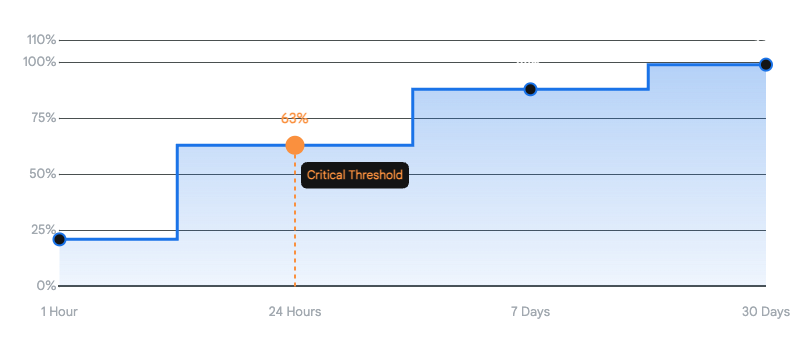
On the sixth day, the candidate should review their spreadsheet for any connections accepted in the past week that lacked a subsequent conversation. The candidate must draft a follow-up message that adds value rather than demanding attention. They should never use phrases like "Just following up on my previous message" or "Just bumping this to the top of your inbox". These phrases induce guilt and annoyance.
Instead, the follow-up should offer something useful. The candidate might share a link to a relevant technical article, a short summary of a project they just completed that relates to the company's tech stack, or ask a hyper-specific question regarding a tool the team uses.
For example: "Hi David, thanks for connecting. I noticed your team utilizes AWS for deploying models. I've been experimenting with SageMaker recently; do you find it handles the deployment latency well for your specific use cases?"
This approach keeps the conversation focused on technology and industry practices. It subtly demonstrates the candidate's technical competence without aggressively pushing for an interview or demanding a resume review.
Day 7: Performance Review and System Iteration
The final day of the audit requires the candidate to measure the impact of the new strategy against industry benchmarks. The days of sending 100 messages and hoping for a miracle are over. The candidate must treat their outreach like a localized, data-driven marketing campaign.
The candidate should review their spreadsheet and calculate the new metrics. A successful, highly targeted campaign should yield a connection acceptance rate between 30% and 45%. Of those accepted connections, the candidate should aim for a reply rate of 20% to 30% on the initial message or the first follow-up.
| Metric | Industry Average | High-Performance Target | Action if Below Target |
|---|---|---|---|
| Connection Acceptance Rate | 29.61% | 40% - 45% | Revise Profile & Improve Hooks |
| Reply Rate | 10% - 15% | 30% - 50% | Shorten Message & Lower CTA Friction |
Data metrics compiled from standard B2B outreach benchmarks.
If the acceptance rate remains low, the candidate must revisit Day 1 and Day 3. This indicates that either their profile lacks credibility or their hooks are not sufficiently personalized. If the acceptance rate is high but the reply rate remains low, the candidate must revisit Day 4 and Day 6. This indicates that the initial message is likely too long, sounds too robotic, or the call to action demands too much effort from the busy recruiter.
By adhering to this strict, data-driven diagnostic process, a recent graduate can transition from an ignored, automated spammer into a credible, high-value professional. In a market where artificial intelligence capabilities threaten to automate junior tasks, demonstrating the ability to communicate with precise, human context is the ultimate competitive advantage.